
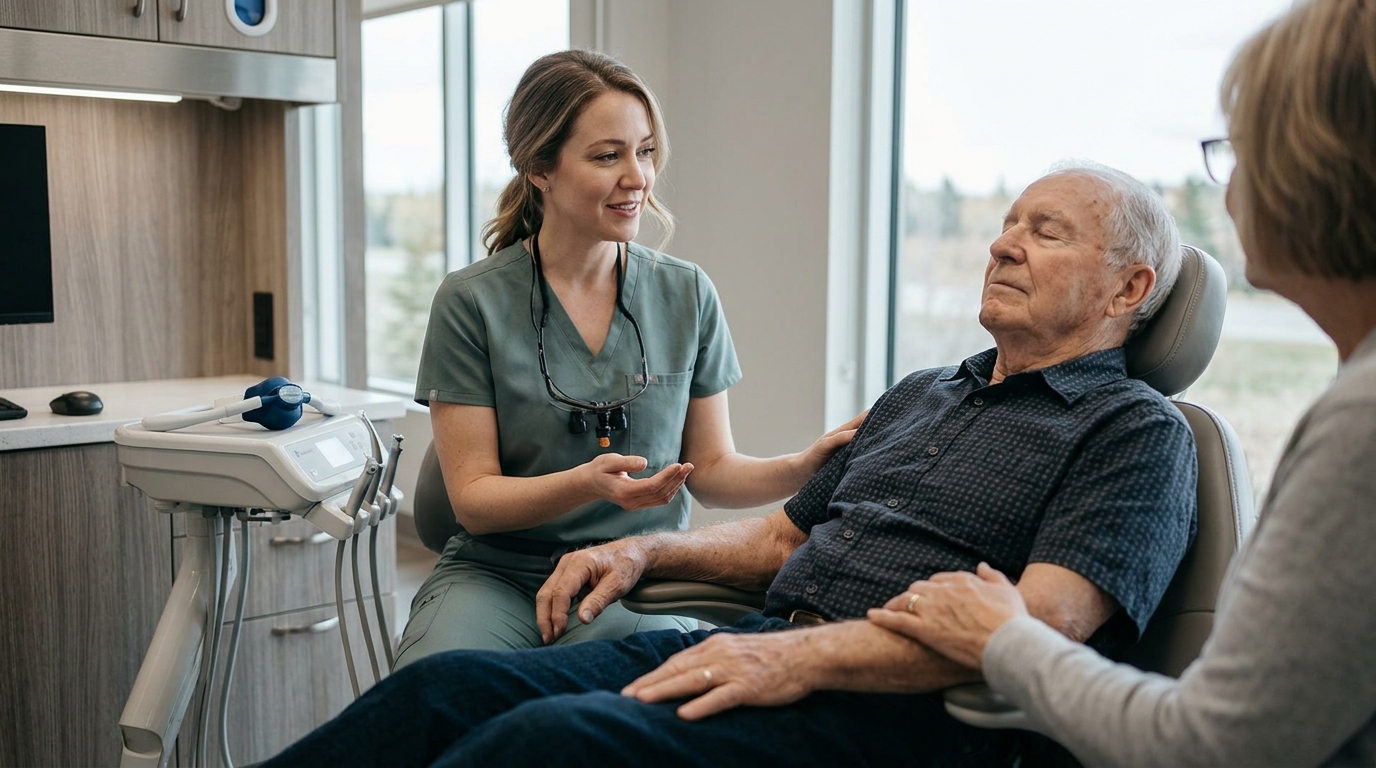
For individuals managing Parkinson's disease, dental visits can present unique physical and cognitive challenges. The most effective sedation options for these patients typically include nitrous oxide for mild anxiety and oral or IV sedation for those experiencing significant tremors or difficulty remaining still. At Pathways Dental Clinic in NE Calgary, our team tailors these approaches to ensure safety and comfort during complex procedures.
Understanding the Unique Challenges of Parkinson's in the Dental Chair
Parkinson's disease is a progressive neurological disorder that affects movement, often resulting in tremors, rigidity, and bradykinesia. These symptoms can make standard dental procedures difficult because patients may struggle to keep their mouth open or remain still for extended periods. The condition can also impact a patient's ability to communicate discomfort clearly, which complicates the treatment process.
At Pathways Dental Clinic, we recognize that a standard appointment may not suffice for every patient. Our dentists, including Dr. Tony Kim, are trained to assess these specific physical limitations before beginning any work. By understanding the stage of the disease and the current medication regimen, we can anticipate how a patient might react to the dental environment. This proactive approach helps us select the right level of sedation to ensure the procedure is both safe and efficient.
Nitrous Oxide: A Gentle Approach for Mild Symptoms
Nitrous oxide, commonly known as laughing gas, is a mild sedative that is inhaled through a small mask. It is often the first line of defense for patients who experience dental anxiety but do not have severe motor control issues. The gas induces a state of euphoria and relaxation, which can help reduce the stress that often exacerbates tremors. Because it wears off quickly, patients can usually drive themselves home after the appointment.
For many Parkinson's patients in NE Calgary, nitrous oxide provides just enough relaxation to make a routine cleaning or filling manageable. It does not eliminate the need for the patient to follow instructions, but it significantly lowers the anxiety that can cause muscle tension. Our team at Pathways Dental Clinic monitors patients closely during nitrous oxide administration to ensure they remain responsive and comfortable throughout the visit.
Oral Sedation for Moderate Anxiety and Tremors
Oral sedation involves taking a prescribed medication, usually a benzodiazepine, a few hours before the appointment. This method provides light to moderate sedation, making patients feel sleepy and relaxed. For Parkinson's patients who experience moderate tremors or have difficulty relaxing in the chair, oral sedation can be highly effective. It helps reduce the involuntary movements that might otherwise interfere with precise dental work.
It is important to note that oral sedation requires a responsible adult to drive the patient to and from the clinic and monitor them for up to 24 hours after the visit. The medication can interact with other drugs, so our dentists will review your full medical history before prescribing this option. We ensure that the dosage is carefully calibrated to balance relaxation with the need for the patient to remain conscious enough to follow basic instructions.
IV Sedation for Complex Procedures and Severe Symptoms
For patients with advanced Parkinson's disease or those undergoing extensive dental work, IV sedation is often the best choice. This method delivers medication directly into the bloodstream, allowing for rapid onset and precise control over the level of sedation. Patients are in a state of deep relaxation where they are awake but do not feel pain or anxiety. This is particularly useful for patients who have severe rigidity or who cannot tolerate the dental environment for long periods.
Dr. Tony Kim at Pathways Dental Clinic offers IV sedation to ensure that even the most complex procedures can be completed in a single visit. This reduces the number of trips to the clinic, which is a significant benefit for patients with mobility issues. The team monitors vital signs continuously during IV sedation to ensure the patient's safety. This level of care is essential for patients with complex medical conditions who require a high degree of control during treatment.

Coordinating Care with Your Neurologist
Effective sedation dentistry for Parkinson's patients requires close coordination between the dental team and the patient's neurologist. Parkinson's medications can have varying effects on sedation, and some drugs may interact with the sedatives used in the dental office. Before your first visit, we will request a letter from your neurologist detailing your current diagnosis, medication list, and any specific precautions we should take.
This collaboration ensures that we can adjust our sedation plan to account for your specific medical needs. For example, if a patient is taking medications that affect blood pressure, we will monitor those levels more closely during sedation. Our goal at Pathways Dental Clinic is to create a seamless care plan that addresses both your oral health and your overall medical well-being. We believe that by working together with your healthcare team, we can provide the safest and most comfortable experience possible.
Key Takeaways
- Parkinson's disease can make dental visits challenging due to tremors, rigidity, and difficulty remaining still.
- Nitrous oxide is a mild option suitable for patients with anxiety but minimal motor control issues.
- Oral sedation helps reduce moderate tremors and anxiety but requires a responsible adult for transport and monitoring.
- IV sedation is the most effective option for patients with severe symptoms or those undergoing complex procedures.
- Close coordination with your neurologist is essential to ensure that sedation medications do not interact with Parkinson's treatments.
- Pathways Dental Clinic in NE Calgary offers personalized sedation plans tailored to the specific needs of patients with complex medical conditions.
Frequently Asked Questions
Can I drive myself home after oral sedation?
No, you cannot drive yourself home after oral sedation. The medication can affect your judgment and reaction times for up to 24 hours. You must have a responsible adult drive you to and from the clinic and monitor you at home for the remainder of the day.
How does Parkinson's medication affect sedation?
Parkinson's medications can interact with sedatives, potentially altering their effectiveness or side effects. It is crucial to provide your dentist with a complete list of your medications so they can adjust the sedation plan accordingly and ensure your safety.
Is IV sedation safe for patients with Parkinson's disease?
Yes, IV sedation is generally safe for patients with Parkinson's disease when administered by a qualified dentist. Our team monitors your vital signs continuously and adjusts the dosage in real-time to ensure you remain safe and comfortable throughout the procedure.
How long does nitrous oxide last?
The effects of nitrous oxide wear off very quickly, usually within 15 to 30 minutes after the mask is removed. This makes it a convenient option for patients who need to return to their daily activities shortly after the appointment.
Do I need to fast before sedation?
For IV sedation, you will typically need to fast for several hours before the appointment. For oral sedation and nitrous oxide, fasting is usually not required, but you should follow the specific instructions provided by our office to ensure your safety.
Can I have a dental emergency treated with sedation?
Yes, we can provide sedation for dental emergencies if necessary. However, the type of sedation used will depend on the nature of the emergency and your current medical status. Please contact our office immediately if you are experiencing a dental emergency.
Conclusion
Managing Parkinson's disease does not have to mean compromising your oral health. With the right sedation options, you can receive the dental care you need in a safe and comfortable environment. At Pathways Dental Clinic, we are committed to providing personalized care for patients with complex medical conditions. Our experienced team will work closely with you and your neurologist to develop a sedation plan that meets your specific needs. If you are looking for a dentist in NE Calgary who understands the unique challenges of Parkinson's disease, we invite you to schedule a consultation with us today.